This site is intended for patients and caregivers.

Visit Healthcare Provider Site
Illustration of muscle anatomy with tendons and connective tissue highlighted in blue

Understanding the role of HDAC in Duchenne

Duchenne muscular dystrophy is a rare, progressive genetic condition that affects muscles used for movement, breathing, and heart function.

But to better understand Duchenne progression, it helps to take a closer look inside the muscle, starting with a protein called dystrophin. Loss of dystrophin triggers a series of changes inside the muscle, including overactivity of an enzyme called histone deacetylase (HDAC).

What is HDAC?
Abstract illustration of pink and blue muscle and connective tissue anatomy

The effects of missing dystrophin

In Duchenne, a genetic variant prevents the body from making dystrophin. Without dystrophin, muscle fibers are more fragile and can get damaged more easily, making it harder for muscles to stay strong.

  • Healthy muscle with dystrophin

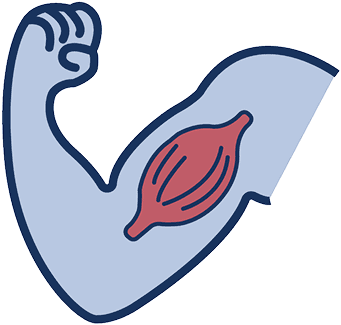
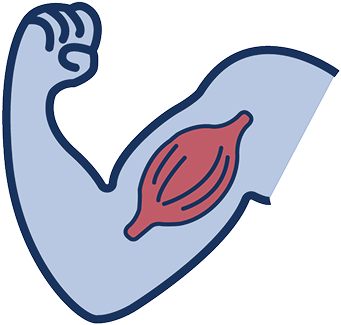
    Illustration of arm muscle with dystrophin
  • Muscle in Duchenne without dystrophin
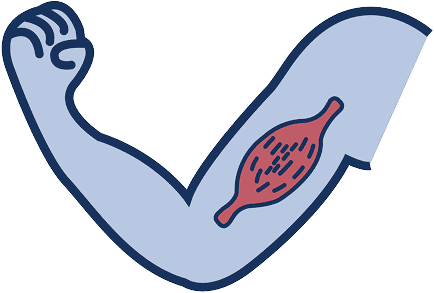
    Illustration of arm muscle without dystrophin

When the body doesn't have dystrophin, it causes:

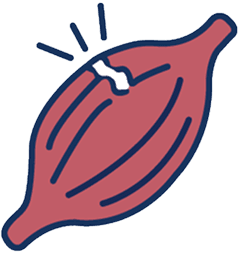
  • Illustration of muscle healing

    Increased muscle damage

  • Illustration of fire, representing inflammation

    Inflammation

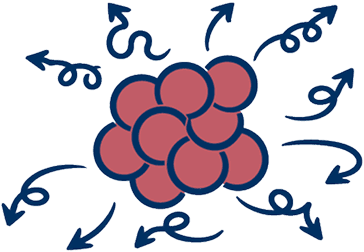
  • Illustration of overactive HDAC

    Overactivity of proteins that affect muscle repair, such as HDAC

About HDAC

HDAC is an enzyme in the body's cells that helps control how muscles function and repair themselves.

HDAC in healthy muscle vs HDAC in Duchenne

Abstract illustration of muscle

Because Duchenne impacts the body in many ways, treatment may involve more than one approach.

Explore treatment approaches and disease management